
By Mark Dovich – Reporter, South Florida Business Journal

South Florida’s continued growth as a business hub hinges on whether the tri-county region can create enough housing for the essential workers and professionals who help power its economy, experts say.But soaring costs for construction, financing, insurance, labor and land have made it harder than ever for developers to pencil out affordable and workforce housing projects.
When state lawmakers approved the Live Local Act in 2023, the real estate community viewed it as a potential game-changer for low- and middle-income housing. Yet, it’s taken nearly three years for the first projects in South Florida – from Princeton to Boynton Beach – to break ground.
After recent updates to the law, developers are increasingly optimistic that more projects will come to fruition. But whether it can happen at the scale needed to address the tri-county region’s dire housing shortage remains to be seen.
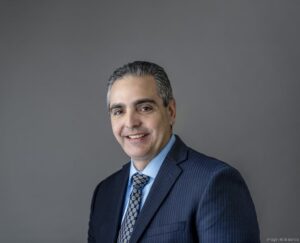
“Live Local is a meaningful tool, but it’s not a silver bullet. … We’re already seeing real movement across Miami-Dade, Broward and Palm Beach [counties],” said Alberto Milo Jr., president of Related Urban Development Group, part of Miami-based Related Group. “But closing South Florida’s affordability gap will take Live Local working alongside other tools.”
Housing for the ‘missing middle’
South Florida needs more than 30,000 new housing units just to meet current demand, according to an April study by Florida State University’s DeVoe L. Moore Institute, in partnership with the Reason Foundation and Florida Policy Project.
The Live Local Act aims to spur more affordable and workforce housing by allowing developers to bypass local zoning and density requirements, earn tax incentives and fast-track projects.
It grants the highest density a city or county allows for housing to be built on land zoned for industrial, commercial or mixed-use development, so long as at least 40% of the units are reserved for residents making up to 120% of area median income. All income-restricted units are eligible for tax abatements. Projects are subject only to administrative approval by city or county staff, bypassing the public hearing process.
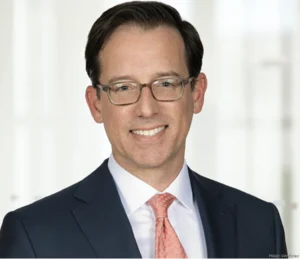
“The Live Local Act was a big departure, in terms of the state’s involvement in growth management,” Day Pitney land use attorney Steven Wernick said. “There was a recognition that the housing affordability crisis was becoming a big deal, and that the state government needed to play a bigger role.”
Industry insiders say it’s notable that the law sets its maximum at 120% of AMI, well beyond traditional definitions of affordability, which typically top out at 80% of AMI.
That allows incentivizing not only affordable housing for low-income residents, but also workforce housing for the essential workers and professionals, who are often referred to as the “missing middle” – too well off to qualify for public housing, but often not affluent enough to afford market-rate housing.
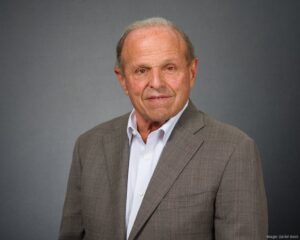
“The law was sort of an endorsement to expand the focus of traditional affordable housing to include workforce housing,” said Michael Wohl, principal of Coral Gables-based Coral Rock Development Group.
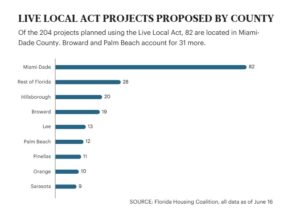
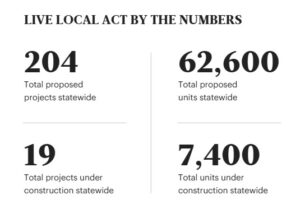
Since the Live Local Act first passed, developers have proposed more than 200 projects statewide, though fewer than 20 have broken ground, according to figures from the Florida Housing Coalition, a Tallahassee-based nonprofit.
That comes down, in large part, to confusion over the law, experts say.

“The standards were created by the state, but they had to be implemented by the local jurisdictions, and you were seeing a lot of different interpretations,” Greenberg Traurig land use attorney Jorge Navarro said. “There were a lot of people trying to figure out what it meant.”

Amendments passed in 2024 and 2025 aimed to clarify how the law can be applied and how the application and development approval processes should work. That’s had a meaningful impact, said Daniel Lopez, founder and president of Leverage Live Local, a Miami-based consulting firm.
“Closing those gaps in the legislation … is what’s getting people more comfortable,” he said. “A lot of the fear, uncertainty and doubt has been removed.”
A faster path to groundbreaking
Coral Gables-based Beacon Hill Development Group, which specializes in workforce housing, was one of the first developers in South Florida to take advantage of the Live Local Act.
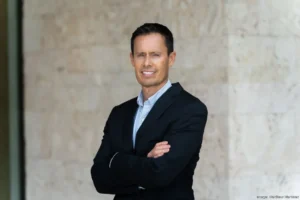
“In 2023, we were already making offers on properties with the anticipation that [the law] would pass,” President Matthew Martinez said. “We were under contract within two weeks of the governor signing it into law.”
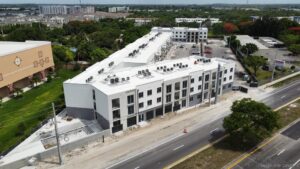
That site, in Miami-Dade County’s Princeton community, is now under development as Beacon Hill at Princeton, a garden-style apartment complex with 112 one- and two-bedroom units, all for residents making 80% to 120% of AMI.
Construction started in June 2025, making it the first Live Local Act project to break ground anywhere in Florida. Completion is slated for this fall. It applied the law’s fast-tracked approvals process and tax abatements, but did not seek extra density or height.
“The site plan approval took only six months,” Martinez said, adding that without Live Local, “you could easily spend a year or two more in entitlements.”
Related Urban also sees the benefits of the speedier timelines.
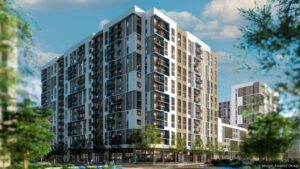
In late June, it plans to break ground on two major projects set to add a total of 778 residences in Miami and South Miami for households earning 20% to 120% of AMI. The Residences at Claude Pepper and Gallery at SoMi Parc, both public-private partnerships with Miami-Dade County, are among the first large-scale developments to tap both the Live Local Act and the county’s rapid transit zoning.
“We didn’t have to use Live Local for any density,” Milo said. “But we were able to shave a lot of time – at least six months, probably closer to 10 to 12 months. In projects of this size, that’s worth millions of dollars.”
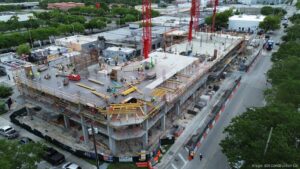
Elsewhere in Miami-Dade County, Coral Rock Development Group has emerged as another Live Local leader, breaking ground in February on Dulce Vida in Miami’s Allapattah neighborhood. The mid-rise project is slated to add 227 apartments, all qualified under the Live Local Act.
“The costs for development are the same, whether you’re doing a market-rate development, or affordable or workforce development,” Wohl said. “So, what we did is max out the subsidy. That’s how you’re able to restrict the rents you’re charging.”
So far, most Live Local Act projects to break ground have been 100% affordable or workforce housing, but there’s an increasing number of projects advancing that combine income-restricted units with market-rate residences.
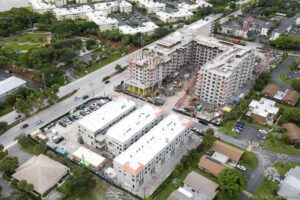
Take The Dune in Boynton Beach, South Florida’s first mixed-income Live Local project to reach construction when Fort Lauderdale-based Affiliated Development broke ground in January. It’ll deliver 298 apartments and 38 townhouses, with 59% for residents earning 120% of AMI or below and the rest at market rates.

The Live Local Act nearly doubled the number of units Affiliated could build, and dramatically sped up the development process, President Nick Rojo said.
“We were able to condense our approvals to four months. It would’ve taken probably a year and a half otherwise,” he said. “There’s no way we would’ve been able to do this project without Live Local.”
More broadly, the law already had a tangible impact in shifting local developers toward affordable and workforce housing projects, Leverage Live Local’s Lopez said.
“The vast majority of clients in our portfolio are conversions from market rate to workforce,” he said.
Latest changes offer boost
Earlier this year, state lawmakers approved another round of amendments to the Live Local Act that aim to further expand the number of projects in the pipeline, as well as make project financing easier.
One big change makes land owned by municipalities, counties, school boards and faith groups eligible for Live Local projects, if the government entity or religious institution agrees to co-file with the developer.
Industry insiders say these transactions would pair school districts and faith groups – which often have underused land, but need to raise money – with real estate companies that have cash to spend, but face increasing land constraints.
“Creating teacher housing within school properties is something that’s always been talked about,” Greenberg Traurig’s Navarro said. “Now we have a mechanism to be able to do that.”
Related Urban and Coral Rock representatives said they’re each exploring opportunities to co-file a Live Local Act project with a local school board.
Another big update? Property tax benefits would vest when the building permit is issued, rather than upon project completion, as stated in the initial law.

That could address a longstanding concern of lenders, who’ve said they’ve had trouble determining a Live Local project’s final expenses, said Russell Galbut, managing principal of Crescent Heights and chairman of GFO Investments in Miami. He’s bet big on Live Local, with proposals across South Florida that include the high-profile mixed-use redevelopment of the Galleria Fort Lauderdale.
“Banks want to support workforce housing because they get all sorts of credits for it, but they can’t do it when there’s uncertainty,” Galbut said. “I think with the new amendments, that uncertainty should go away.”

J.C. de Ona, division president for Southeast Florida at Centennial Bank, agrees.
“This would provide some clarity upfront for the lender,” he said. “It’s a pretty big change, and now it’s definitely going to be easier for a bank to underwrite.”
These amendments await the governor’s signature. If left unsigned, they’d go into effect July 1.
New frontiers for growth
Even with the latest changes, developers say there’s still room to refine the Live Local Act further.
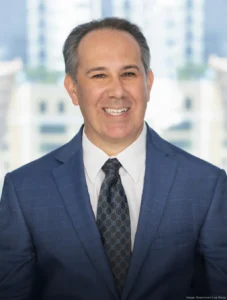
Keith Poliakoff, managing partner of Government Law Group in Fort Lauderdale, said state lawmakers should consider further amendments to limit local officials’ ability to block or slow-walk Live Local projects. He pointed to ongoing litigation over proposals in Bal Harbour, Hollywood and Miami Beach as examples.
“It’s been an incredible pushback of every manner to try to delay and thwart projects from coming forward,” he said. “Unfortunately, I have not had one municipality that’s been a slam dunk.”
Another major step, industry insiders say, would be getting Fannie Mae, Freddie Mac and the U.S. Department of Housing and Urban Development on board to finance Live Local Act projects.

“I’ve participated in at least a dozen calls involving HUD representatives, trying to understand how to get them comfortable with the legislation,” said Nelson Stabile, co-founder of Miami-based Integra Investments. “That’ll be huge in unlocking even further potential.”
Nonetheless, experts say the legislation, as currently crafted, offers developers a powerful tool to boost the supply of affordable and workforce housing across South Florida, while acknowledging broader solutions are needed to fully tackle the tri-county region’s housing shortage.
“I think it’s one of the most important pieces of housing legislation that was passed in this country,” Affiliated’s Rojo said. “It definitely moves the needle and is working as intended, but to reach the scale South Florida actually needs, Live Local should be paired with other subsidies.”
Stabile agrees that the Live Local Act will have a meaningful statewide impact.
“I’d say we have a pipeline of at least 1,500 units that I’m not sure would pan out, from a financial feasibility perspective, were it not for Live Local,” he said. “And we’re just one player. Imagine when you extend that across the wide range of investors and developers that we have in South Florida.”
View the article here: https://www.bizjournals.com/southflorida/news